How to Operate at Your Full Potential as a Founder
When I ask founders, "On a scale of 1 to 10, to what degree are you operating at your full potential?" the answers usually come back: 5, 6, maybe 7. Sometimes a 4.
It's an interesting question because what are you gauging? What determines that number and what criteria are you evaluating yourself on?
Oftentimes, the mind invents an abstract ideal of "full potential," some level of effectiveness greater than where you are now. And then it obsesses over the gap.
But that obsession drains the very thing you need most: creative energy.
Because the actual driver of success isn't wishing you were already somewhere else. It's the percentage of your creative energy that's actually directed toward creating the future you want.
And the question that helps you increase that percentage is: "How do I operate in a state of flow more of the time?"
What Flow Actually Is
So what is this flow state?
From my experience, flow happens when you're doing two things simultaneously:
1. Present to current reality — Not resisting it, not wishing things were different. Accepting things as they are right now.
2. Imagining your desired future — Seeing clearly where you want to go.
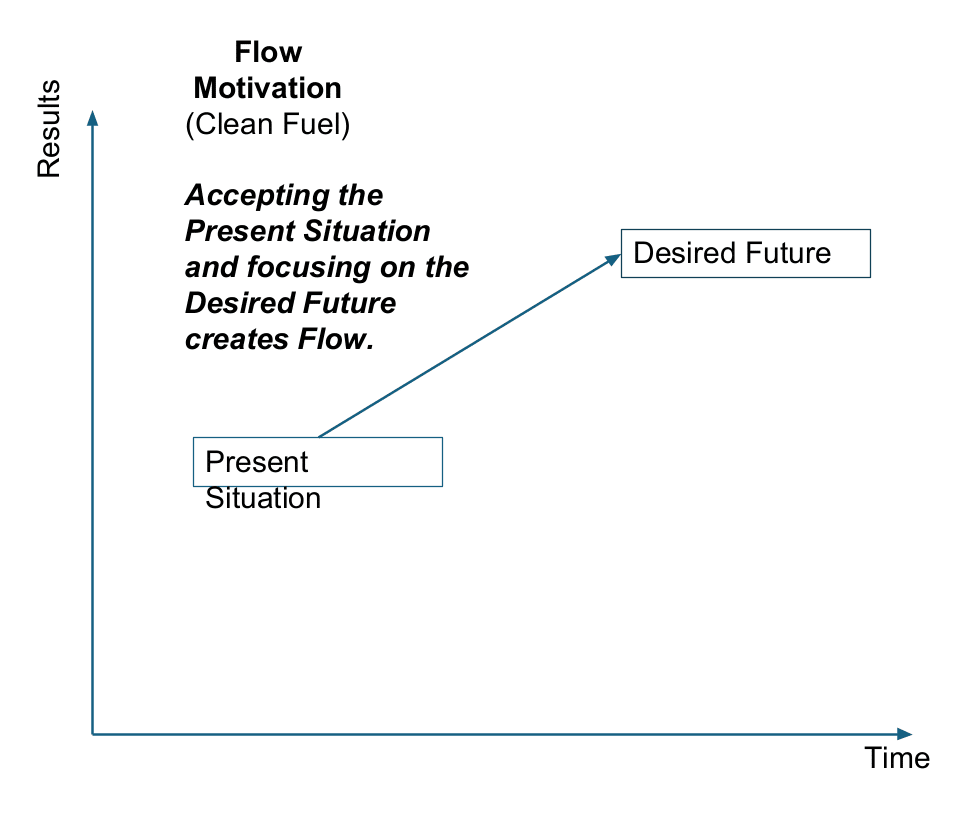
When you're doing those two things at once, the cognitive dissonance between how things are now and how you imagine them to be in the future generates this creative flow where ideas are coming through, ideas for things to do, new strategies.
That creates excitement and inspiration.
It's operating with clarity, curiosity, wonder, creativity. Energized and excited about the future. You're in a state where you're both highly productive and experiencing high joy and creativity.
That's the state where you can be maximally effective and creative.
So if flow is so powerful, why don't we spend more time there?
What Takes You Out of Flow
Most founders drift out of flow in one of two ways:
1. Frustration - They collapse their desired future into the present.
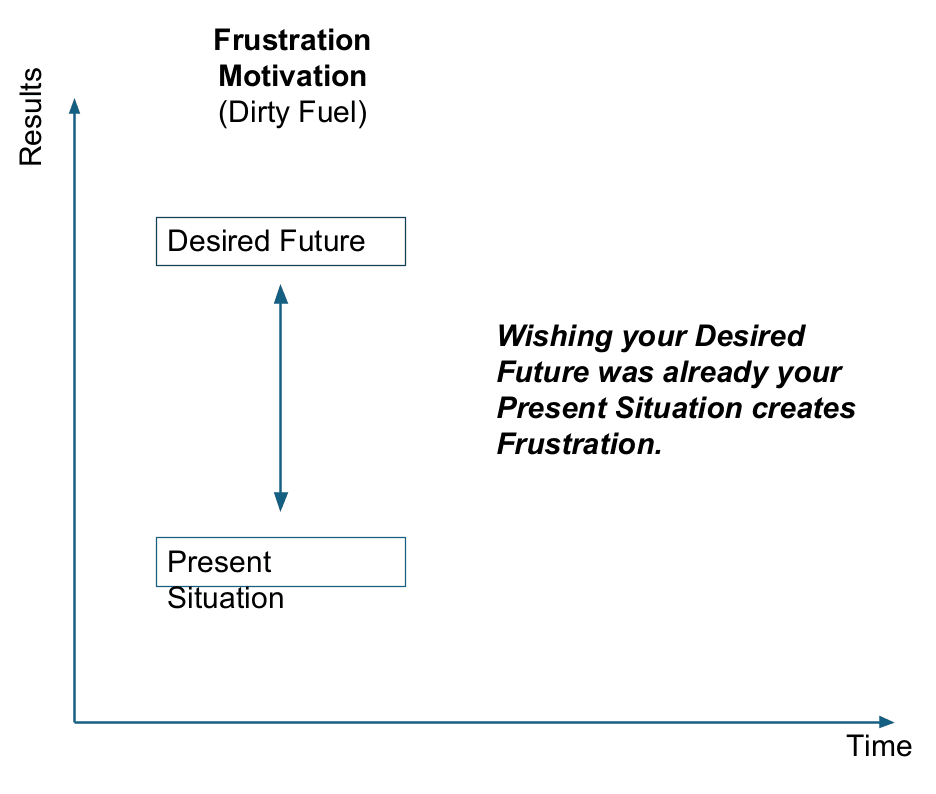
"Why haven't I yet built that successful company? Why is my team not moving faster? Why am I not yet more confident?"
They waste energy on the gap between how it is and how they wish it already was. This is wishing you were already in that desired future instead of accepting where you are now.
2. Fear - They focus on the undesired future.
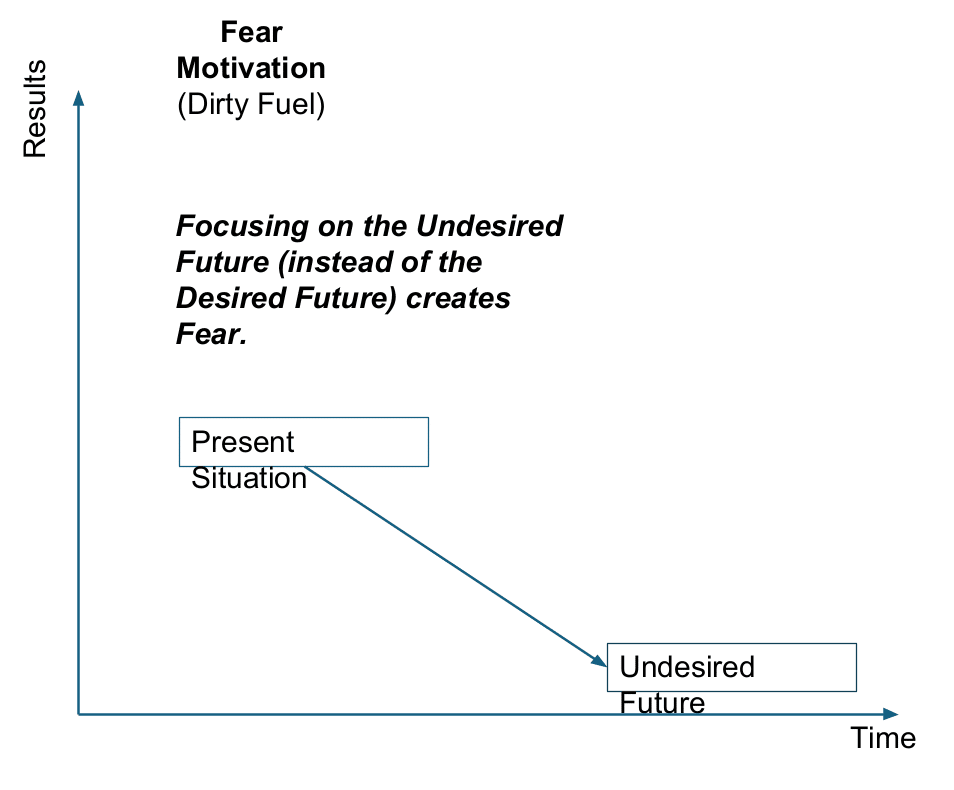
"If we don't move faster, we'll fail. We won't raise our next round."
It's like driving a motorcycle looking at the wall instead of the road. You're going to hit the wall.
What Triggers These Drifts
Sometimes it's external situations:
- A customer churns
- A team member quits
- Conflict on the team
These are the situations you resist, and that resistance takes you below the line into frustration or fear.
But here's the thing: Even when nothing's going wrong externally, your mind still drifts.
It’s scanning for problems and will even invent them to try to solve.
I noticed this the Monday morning after Thanksgiving. My mind started scanning: What's wrong? What problems do we have?
Some of them weren't even problems, just decisions I needed to make. But my mind labeled them as threats.
This is what human minds do. They're radars constantly scanning for danger leading to our attention drifting from excitement about our desired future to wishing we were already there, or to imagining the negative future states we don't want to happen.
Even when everything's going great.
A Better Way to Measure Yourself
So instead of measuring yourself against some abstract "full potential," ask:
- What percentage of the time am I operating in a state of flow (present, curious, creative, energized) versus operating from frustration or fear?
- What percentage of time am I motivating myself from excitement about the future I want versus from fear of what I don't want?
- What percentage of time am I motivating my team from those different places?
When you measure yourself against "full potential," you're often comparing your internal reality to everyone else's polished exterior.
It's like the metaphor with a bunch of robots. You see your own robot with all the duct tape and bubble gum holding it together, but you see everyone else's polished exterior and assume theirs are perfectly assembled inside and out.
Your mind is comparing your flaws to everyone else’s highlight reel. And that comparison tells you nothing about your actual effectiveness.
The real measure is: Are you operating from a state where your creative energy flows toward what you want to create?
This is more useful than trying to measure yourself by someone else's standards. We're all so different. Trying to hit someone else's metrics or match someone else's performance can be a trap.
Of course, you still need to measure objective outcomes and evaluate whether you are leading the team to achieve your goals and realize your vision.
But that's downstream. It's the effect. The cause is: are you operating from a state of flow more and more of the time?
Accessing Your Full Potential
So here's what I invite you to do:
For just this moment, let go of wishing anything was different than it is.
Most of my clients find that question brings real relief. But usually it's just a moment, because they're not used to operating that way.
Your mind will keep drifting, from excited about your desired future to wishing you were already there, or to imagining what you don't want to happen. That's what minds do.
Your practice is to notice when you've drifted. Bring yourself back to presence, to accepting things as they are now. And refocus on the future you're creating.
That's how you access "full potential."
By recognizing there was never anything wrong in the first place and directing that freed-up energy toward the future you actually want to create.
With love,
- Dave Kashen
P.S. Want to spend more time in flow and less in frustration or fear? The 2nd Annual Sun Valley Founders Retreat is coming up soon (Jan 21-25). These 4 days will help you integrate these shifts into how you lead and have a lasting impact on you and your startup. Click here to learn more>>


