What 15 Triathlons Taught Me About Building Teams
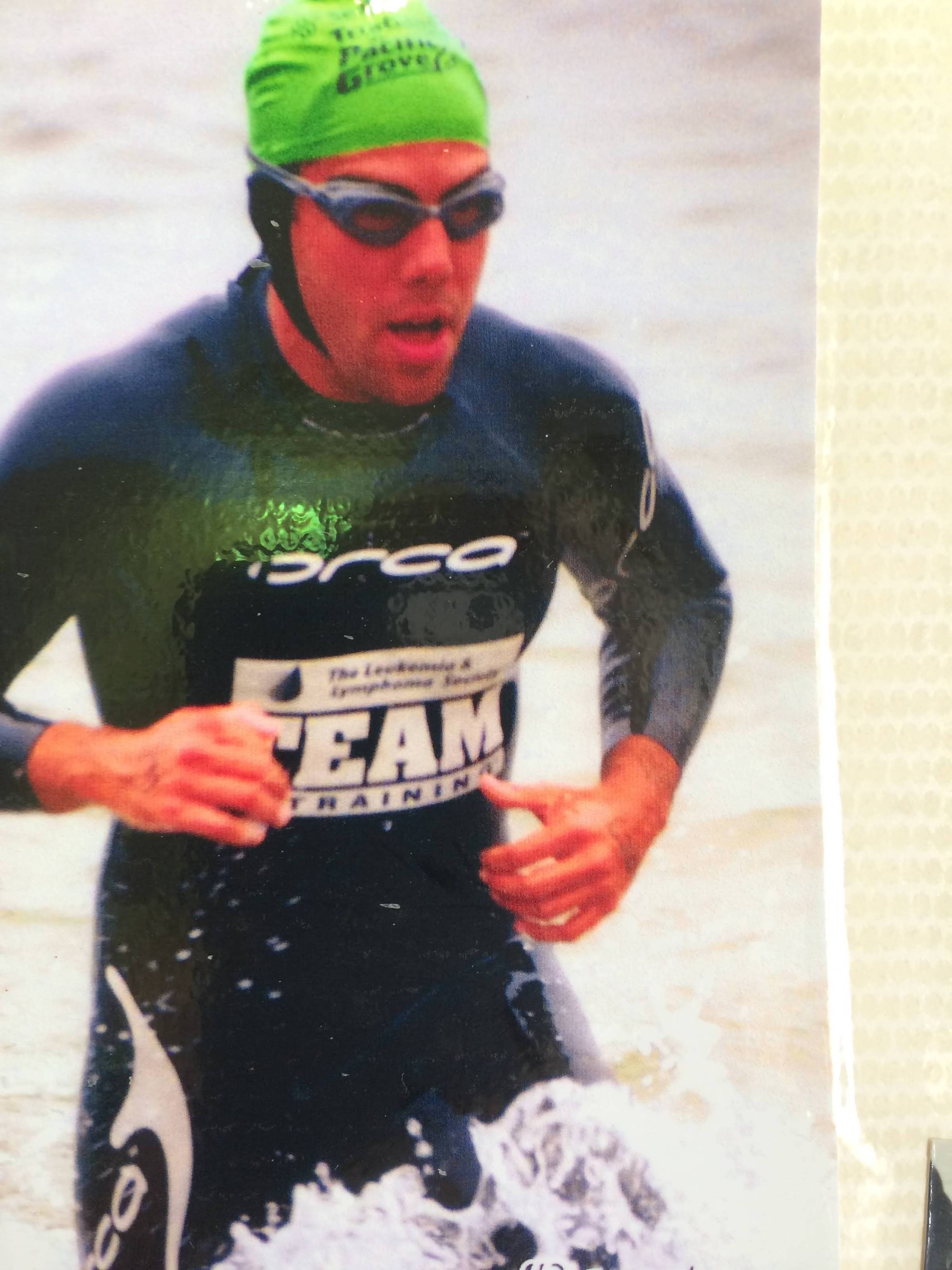
Over the years, I competed in about 15 triathlons, some of them half Ironmans...
And when you're at mile 7 of the run (after swimming 1.2 miles and biking 56) your body is just done.
Not just tired. Done.
It takes a certain kind of force of will and spirit to just keep going, keep running. Your legs are screaming. Your mind is offering you a dozen rational reasons to walk, to slow down, to just finish whenever you can.
And then you hear it: "Come on, come on!"
People cheering you forward. Training partners who know exactly what mile 7 feels like, who've been through the same months of preparation, offering their support when you need it most.
That clear, unwavering "I want you to win" support is what carried me across the finish lines every time.
Despite years at Goldman Sachs and one of the world's top hedge funds, I found one of my most important leadership lessons while training for and competing in those races.
How Depression Led Me to Triathlons
I just moved to the Bay Area for a hedge fund role, eight people managing billions of dollars. I thought I had arrived.
But I also moved expecting a relationship to continue. She was planning to move to the Bay Area too and we were planning our relationship around that. But then she decided to stay where she was, which was pretty heartbreaking. Except she ultimately did move and broke up with me instead.
So I was really depressed being in a new city, not knowing many people, and totally heartbroken. I remember taking walks every day from the office, calling my mom, just crying.
That's when I decided to join Team in Training, the Leukemia and Lymphoma Society's endurance program.
I thought it would help me meet people and get out of my funk. I had no idea it would parallel the type of team culture I'd later help the world's best founders build.
What Most Startup Teams Get Wrong
In most companies, there's a default norm: high corrective activity, low supportive and appreciative activity.
We're weirdly shy about celebrating, appreciating, and cheering each other on. I think part of it is that it can feel more intimate (therefore scarier) to genuinely appreciate someone than to give them constructive feedback.
There's also this fear that if we're too appreciative or supportive, people will lose their motivation or expect too much. Or we keep people at arm's length because we might have to let them go, and that's easier if we haven't gotten too close.
But here's what we're missing: the difference isn't the amount of feedback or celebration. It's the underlying frame.
When it's unclear whether we're actually on the same team (whether we're all racing toward the same finish line together) feedback feels like judgment. Appreciation feels performative. Accountability feels adversarial.
When the goal isn't felt to be shared by all parties, interactions begin to feel transactional instead of transformational.
When Everyone Wants You to Win
Here's what made Team in Training different from every other high-performing group I'd been part of:
The intent behind every interaction was crystal clear.
When coaches gave feedback ("keep your fingers closer together when you swim" or "raise your legs higher to reduce drag") it never felt like criticism. It felt like constructive feedback. Always. The difference? You knew it was coming from someone who wanted you to succeed, who cared about you, who was trying to support and help you.
There was no negative reinforcement. Just: "You can do it. We believe in you."
Individual goals nested inside a collective mission.
Everyone had their personal development path. That person's trying to get faster on the run. This one's working on becoming a better swimmer. You knew what people were working on, and you could help them on their paths.
But there was also this group goal: raising money to fight cancer, getting a certain number of people across the finish line. We were literally in it together.
Cultural symbols made the frame tangible.
Purple jerseys with white and green accents. When you'd see someone in Team in Training gear at a race (even from another city, another state, someone you'd never met) you'd automatically say "Go team!" and they'd say it back.
It was part of the culture to cheer each other on. You'd see it modeled, and then you'd perpetuate it. An upward spiral: people cheer you on, which makes you want to cheer them on. Everyone feeling supported makes everyone want to support others.
It was one of the most positive, supportive groups I'd ever been part of. And it was wildly effective at getting people to believe in themselves and push beyond what they thought possible.
Building Your Own 'Go Team' Culture
So how do you create that Team in Training dynamic in your company?
1. Make intent explicit during feedback conversations. When giving feedback, try: "I'm sharing this because I care about you and want you to win." It sounds simple, but it shifts everything.
2. Nest individual development inside collective vision. Don't just have company OKRs and individual performance reviews. Help everyone understand their personal growth path AND how it connects to the team's finish line. What is this person trying to get better at? How can you help them on their path while advancing the shared mission?
3. Create cultural rituals that reinforce "we're in this together." Team in Training had "Go team!" and purple jerseys. What's your version? It could be a phrase, a tradition, a symbol. Something that immediately signals: we're on the same team, moving toward the same goal.
4. Dramatically increase your ratio of appreciation to correction. Research shows the most effective teams maintain a 5:1 ratio of positive to negative interactions. Clean fuel (belief, support, celebration) is more effective than dirty fuel (fear, criticism, pressure) at taking people beyond their limits.
The technical feedback still needs to be precise. The standards still need to be high. But when it's clear you're all in it together, constructive feedback stops feeling like blame and starts feeling like help.
When I think back to mile 7 of those half Ironmans, I realize what those "Come on, come on!" shouts really meant.
They were proof that someone else believed I could do what I wasn't sure I could do myself. And that belief made me capable of more than I thought possible.
I joined Team in Training to escape depression. What I found was the answer to a question I didn't know I would be asking years later: what makes teams extraordinary?
It wasn't what I learned at Wharton or Goldman Sachs. It was amateur athletes training for cancer patients, who understood something most startups miss: when "I want you to win" is the assumption behind every interaction, people break through barriers they never imagined crossing.
We treat business as if human connection and emotion don't matter, when in fact acknowledging our humanity is fundamental to building effective teams. As Chip Conley says, "The most neglected fact in business is that we're all human."
So here's my question: When your team gets feedback, do they hear "you're being judged" or "we want you to win"?
That difference is everything.
With love,
- Dave Kashen
P.S. Want to ask me a question that will be answered in a future newsletter and/or youtube video? You can submit a question here: https://eulvx5p8j26.typeform.com/to/XgWoYLi7


